Happy Hunter’s Moon, everyone!
The nights are getting longer here in Toronto.
Suddenly there seems to be a lot more time alone with that voice inside our heads …
The one that wakes you up at 2am and decides now is the perfect time to question everything you said yesterday while trying to pre-process the things that may go wrong tomorrow.
How do we know when useful thinking turns into overthinking
Our guest today is a psychologist, neuroscientist, Professor of Psychology and Management & Organizations at the University of Michigan, and one of the world’s leading researchers on the voice inside our heads ... Professor Ethan Kross.
He's also the director of Michigan University's Emotion and Self-Control Laboratory, where he studies how we can manage our thoughts and emotions. For nearly two decades his research has investigated a deceptively simple question: How can we control our thoughts, emotions, and behaviours when they stop being helpful?
You might know Ethan Kross from his bestselling book ‘Chatter: The Voice in Our Head, Why It Matters, and How to Harness It,’ which has been translated into more than 40 languages.
His follow-up bestseller, ‘Shift: Managing Your Emotions—So They Don’t Manage You,’ explores how we can better understand and manage our emotions.
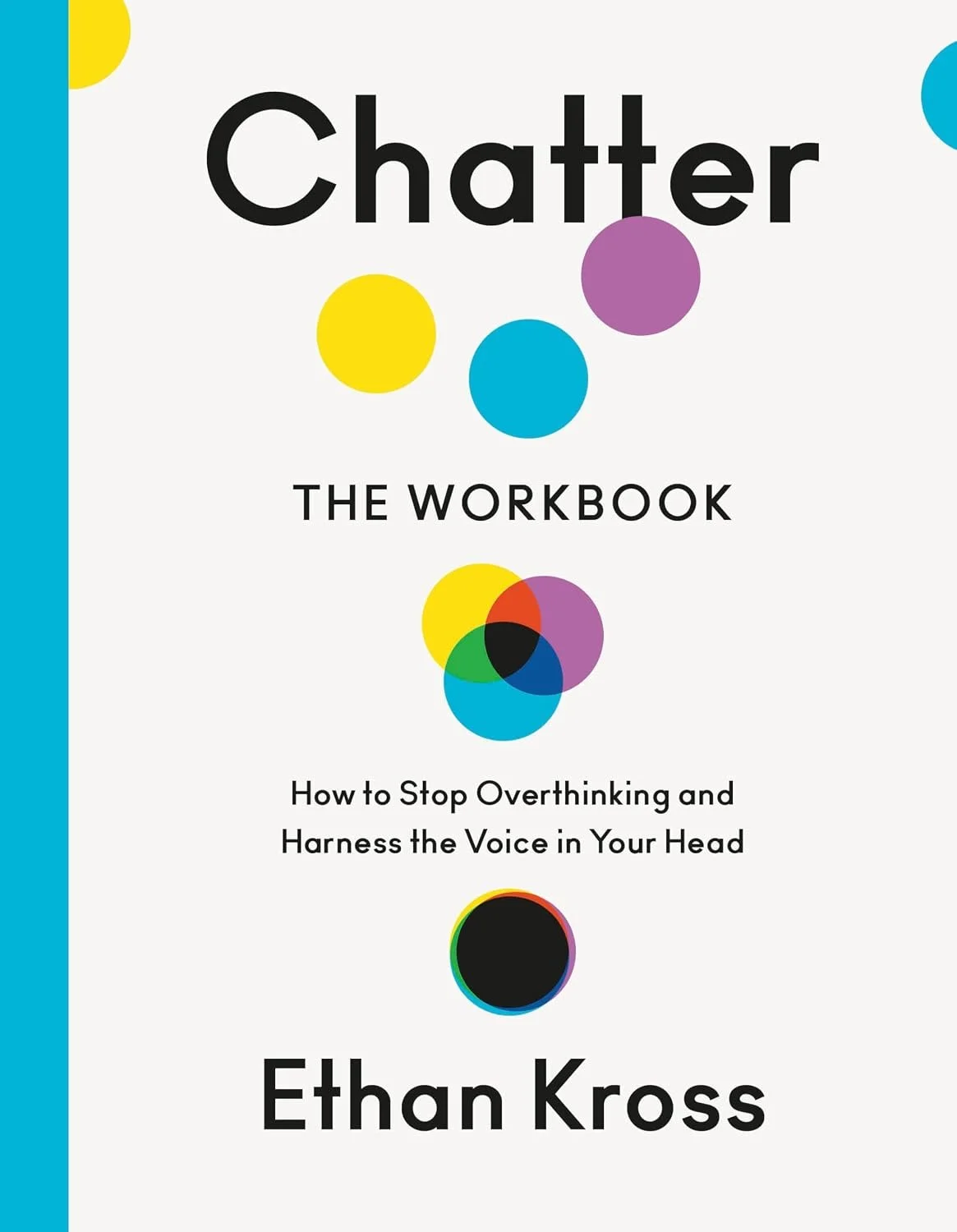
And his newest release, ‘Chatter: The Workbook,’ published earlier this year, offers practical exercises to help us stop overthinking and put our inner voice to work.
So ... what exactly is chatter? And how is it different from simply thinking about a problem? Ethan gives us a wonderfully simple answer: Are you making forward progress?
Our inner voice helps us plan, remember, imagine, solve problems, make decisions, and understand ourselves.
The trouble begins when we keep circling the same problem without getting anywhere.
When introspection turns into rumination ... when thinking turns into overthinking. Ethan has spent his career figuring out what we can actually do about it.
We discuss how to create psychological distance from our problems, what Ethan does when chatter wakes him up at 2am, why constantly checking the news can make us more anxious, how nature changes the way our minds work, why experiencing awe can help shrink our problems back down to size, the surprising power of simply helping other people, and, of course ... Professor Ethan Kross’s 3 most formative books.
Let's flip the page to Chapter 166 now ...
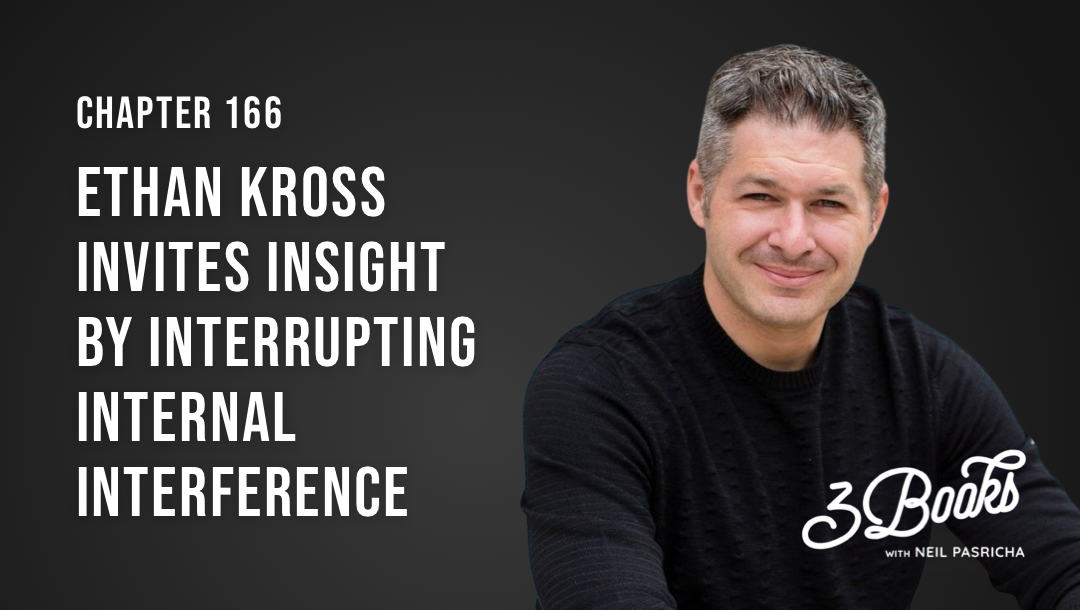
Chapter 166: Ethan Kross invites insight by interrupting internal interference
View full transcript here
CONNECT with ethan
eThan’S 3 Books
First Book (15:57)
Second Book (49:17)
Third Book (1:05:07)
wORDCLOUD OF THE CHAPTER
Quotes
“I do not take the position that technology, whether it be social media or AI, is good or bad for us. It depends entirely on how we engage with those technologies.” - Ethan Kross | 3 Books Podcast
“If you can find meaning, purpose, if you can find that North Star, that can allow you to weather through anything.” - Ethan Kross | 3 Books Podcast
“It doesn’t really matter what you do, but just make sure you’re helping people.” - Ethan Kross | 3 Books Podcast
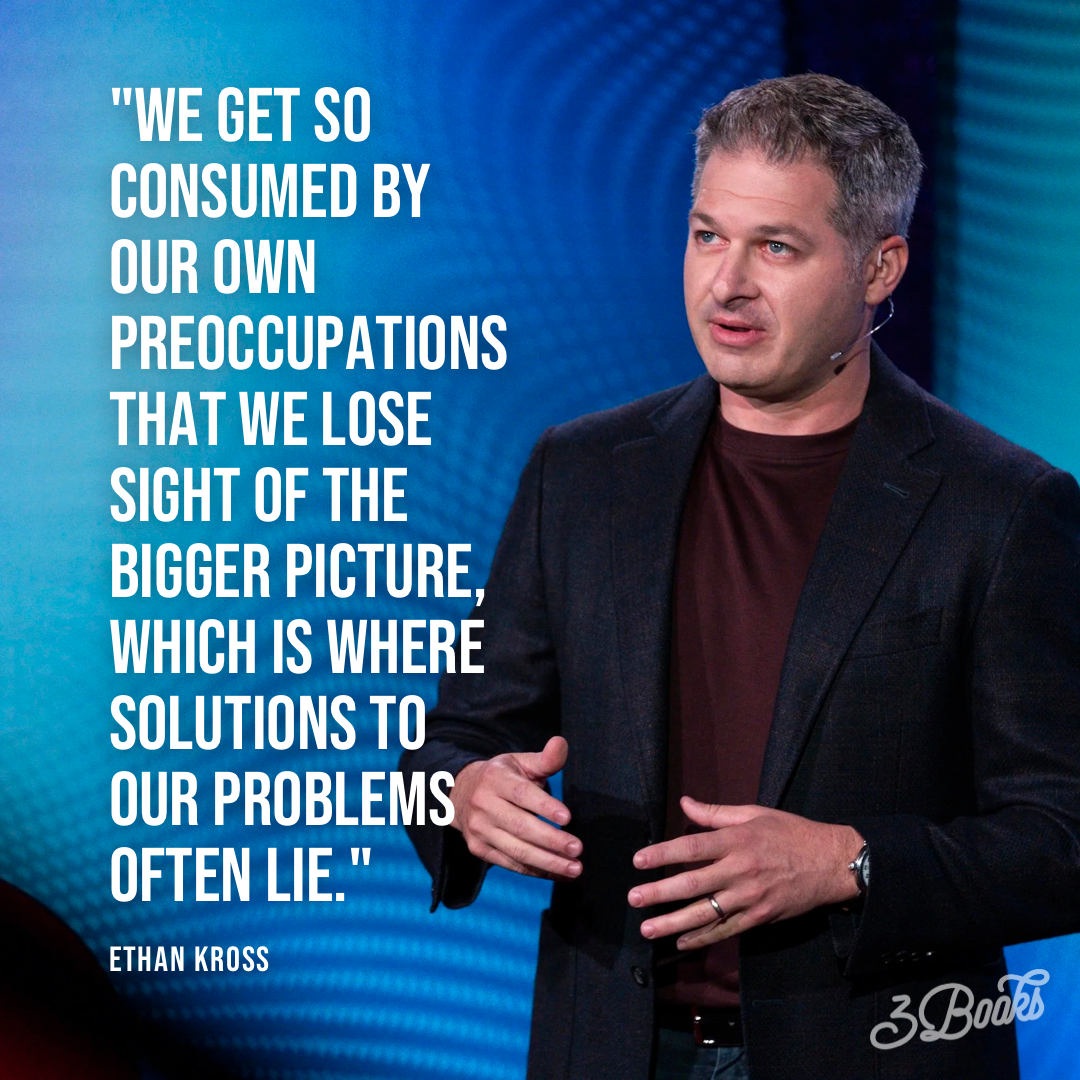
“We get so consumed by our own preoccupations that we lose sight of the bigger picture, which is where solutions to our problems often lie.” - Ethan Kross | 3 Books Podcast
“Awe is an emotion we experience when we’re in the presence of something vast and indescribable — something that feels bigger than us.” - Ethan Kross | 3 Books Podcast
“The key theme is you’re not making forward progress.” - Ethan Kross | 3 Books Podcast
“There can be enormous power from plugging in less frequently.” - Ethan Kross | 3 Books Podcast
“When I wake up with chatter at 2 a.m., if I ask myself ‘How am I going to feel about this tomorrow morning?’ I’m instantly calm.” - Ethan Kross | 3 Books Podcast
“I didn’t love nature. You know, nature was where you got mugged.” - Ethan Kross | 3 Books Podcast
“WOOP” is Wish, Outcome, Obstacle, Plan - four steps designed to help people follow through on their goals.” - Ethan Kross | 3 Books Podcast
“If I find myself getting hot under the collar because my kids are fighting, then...” the power of an if-then plan.” - Ethan Kross | 3 Books Podcast
“I think you and the guests that you have recognize the power of books to change lives - and, if you’re lucky, have those lives aggregate in ways that change cultures.” - Ethan Kross | 3 Books Podcast
“I think there’s going to always be a place for books.” - Ethan Kross | 3 Books Podcast
“One of the best ways to help yourself is to help other people.” - Ethan Kross | 3 Books Podcast
Show Notes
Ethan Kross – University of Michigan Ross School of Business
'Chatter: The Voice in Our Head, Why It Matters, and How to Harness It' by Ethan Kross
'Shift: Managing Your Emotions—So They Don’t Manage You' by Ethan Kross
'Chatter: The Workbook' by Ethan Kross
Self-talk as a regulatory mechanism: How you do it matters — Kross et al. (2014)
Exploring Solomon’s Paradox: Self-Distancing Eliminates the Self-Other Asymmetry in Wise Reasoning About Close Relationships — Grossmann & Kross (2014)
Meaning Making & Self-Distancing – Emotion & Self Control Lab
Inner monologues, with Ethan Kross – American Psychological Association
'The Amazing Adventures of Kavalier & Clay' by Michael Chabon
'Man’s Search for Meaning' by Viktor E. Frankl
'A Walk in the Woods' by Bill Bryson
Tomorrow, and Tomorrow, and Tomorrow by Gabrielle Zevin